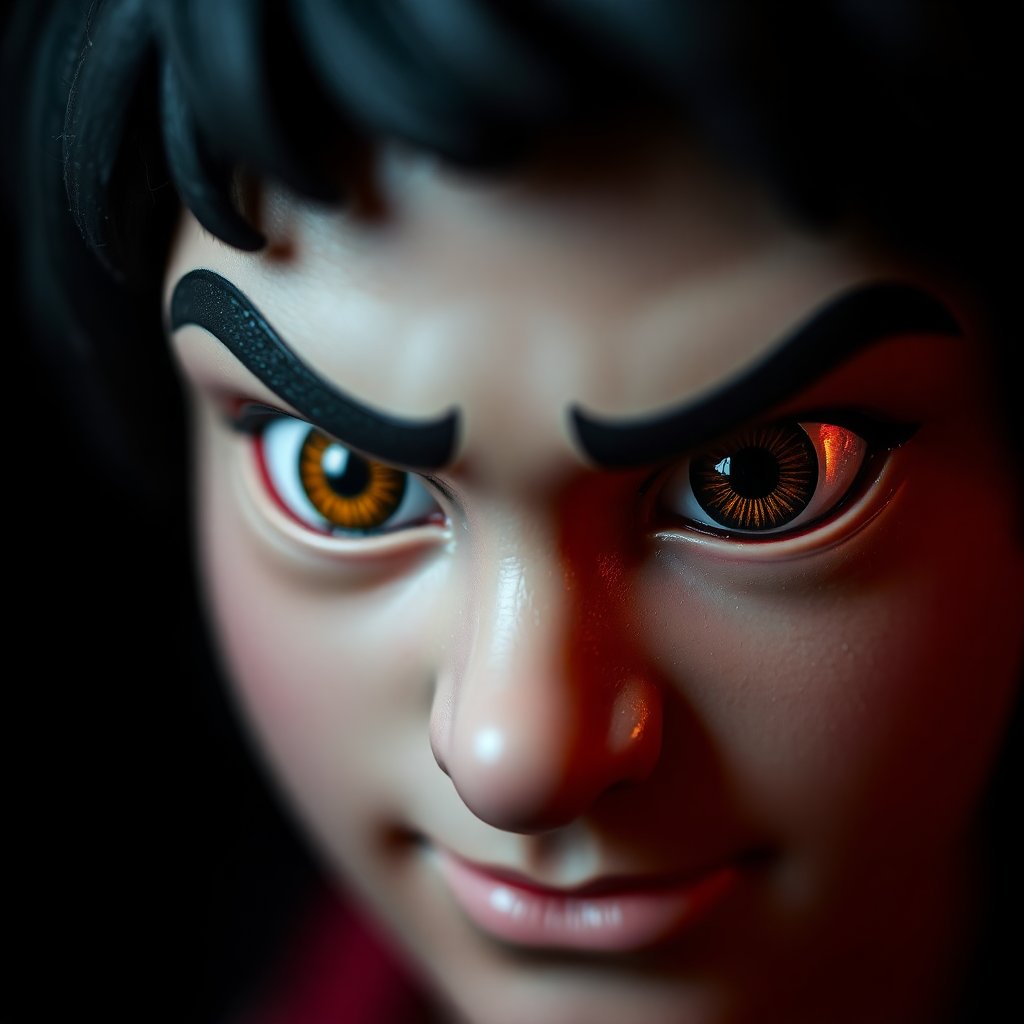
Eyes have a reputation in the hobby that they don't entirely deserve. Yes, they're small. Yes, a bad eye ruins an otherwise well-painted face. But the technique is learnable, and once you have the approach, it becomes one of the more satisfying parts of the model.
The most common reason eyes fail is sequence. Painters try to paint a precise white ball, then a precise coloured iris, then a precise dark pupil — in that order, at that scale, with a size 1 brush. That's the hard way. Here's the easy way.
What You Need Before Starting
A fine brush. A size 0 or 000 brush with a good point is essential for eye work. A size 1 that's lost its point will frustrate you endlessly. If you've been using whatever brush came in your starter kit, consider getting a proper detail brush.
→ Shop fine detail brushes for miniature painting on Amazon
Thinned paint. Eyes require paint thinned more than usual — approximately 2:1 or 3:1 water-to-paint for the fine details. Thick paint fills detail and creates ridges visible at this scale.
Good lighting. Painting eyes under warm household lighting is fighting yourself. A daylight lamp makes a significant difference in seeing what you're actually doing at this scale.
Optional but recommended: A magnifying visor. Even a cheap 2x headband magnifier changes fine detail work. You can see the eye socket clearly and make deliberate marks instead of guessing.
→ Shop hobby magnifying visors on Amazon
The Sequence That Works
Step 1: Paint the whole eye socket dark
Before anything else, paint the entire eye socket area dark — dark brown, very dark grey, or black. This gives you a clean base and creates the shadow of the eye socket, which will be visible around the final result.
Don't try to stay within the eye socket boundaries — paint dark around the whole area. You'll clean up the edges with skin tone later. The goal at this step is a dark foundation, not precision.
Step 2: Paint the white of the eye
Using your finest brush — a size 0 or 000 — paint the white of the eye as a small horizontal line in the socket. Don't try to paint a perfect oval. A straight horizontal line that doesn't quite touch the top and bottom of the socket is perfect.
Paint the white as Pallid Wych Flesh or Ulthuan Grey rather than pure white — pure white looks too stark on faces. The slightly warm off-white reads more naturally as a realistic eye.
Keep the stroke horizontal. Most eyes at miniature scale are wider than they are tall — try to paint a circle and you'll overfill the socket.
Step 3: Paint a vertical stripe for the iris
With a thinned dark colour (dark brown, green, blue, grey — your choice of eye colour), paint a thin vertical stripe across the centre of the white. At miniature scale, this stripe is your iris. You often won't see the pupil separately at gaming distance.
Keep the stripe narrower than you think — it's easy to cover too much of the white. A good eye has visible white on both sides of the iris.
Step 4: Correct and clean up
Here's the key insight most painting guides don't emphasise: cleaning up a bad eye is easier than painting a perfect one first time.
With a fine brush and your skin tone, paint around the eye to clean up any white or dark that got onto the face. Then paint the eyelid line — a thin dark line across the top of the eye — which simultaneously adds realism and covers any imprecision in the top edge.
The eyelid line is what most beginning painters miss. Without it, eyes look unfinished even when the basic technique is correct.
Optional Step 5: Highlight the white
A tiny flick of pure white in the corner of the eye creates a specular highlight that makes eyes look alive. This is optional but effective on hero models and characters.
For rank-and-file troops, skip this step. For characters you're proud of, it takes 5 seconds and makes a real difference.
Eye Colour Choices and What They Communicate
Eye colour in miniature painting is a creative decision, not just a technical one. Different colours read differently at table distance:
Dark brown/hazel: Reads as natural human. Safest choice for human and humanoid models.
Blue: Reads as striking or unusual. Works well for Space Marines (especially chapters with pale schemes), elves, and psychically gifted characters.
Green: Reads as either natural or supernatural depending on the shade. Bright acid-green works for corrupted or daemonic characters. Muted green reads human.
White/blank: The classic miniature horror aesthetic. Works for undead, possessed models, and models with magical vision effects.
Red/orange: Instantly reads as sinister or inhuman. Perfect for Chaos Marines, vampires, and villainous characters.
Yellow/amber: Common for orcs, goblins, and animalistic creatures. The yellow iris gives a predatory appearance.
The Cheating Method (And When to Use It)
The full five-step process is the right approach for characters, heroes, and models you're proud of. For rank-and-file troops, there's a faster option:
- Paint the eye socket area dark
- Place a small light-coloured dot in the centre
- Done
From table distance (3+ feet), a light dot in a dark socket reads as an eye. It's not technically correct, but it works — and it's fast enough to do on fifty Space Marines without going insane.
The community calls this the "dot method" and there's no shame in using it for troops. Save the full technique for characters.
Eye Techniques by Scale
28mm heroic scale (standard Warhammer): The full five-step technique works well. Eyes are small but have enough surface area to work on.
32mm scale (Blood Bowl, some modern releases): Slightly more room to work. Consider adding a defined pupil as a tiny dark dot in the centre of the iris.
54mm and above: At large scale, eyes can be painted with proper iris detail, pupils, and even vein or highlight work. The full portrait technique applies.
Smaller scales (15mm, 10mm): Use the dot method exclusively. Even experienced painters don't attempt full eye technique at 15mm and below.
Practical Tips
Thin your paints more than usual for eyes. Thick paint obscures detail and creates ridges that are visible at this scale.
Use a magnifying visor. If you're squinting at the face from 30cm away, a 2x magnifier makes a significant difference. You can see what you're actually doing.
Accept that some eyes won't be perfect. On rank-and-file troops, an eye that's 70% correct reads as correct from table distance. Save your best efforts for characters and leaders.
Don't paint the eyes last. Paint them early in the face, when you can still make corrections to the surrounding skin without ruining a finished model.
Paint eyes before washing the face. The shade will add depth around the eye socket and help it look sunken and natural.
Comparison: Eye Techniques
| Technique | Difficulty | Time | Quality | Best For | |---|---|---|---|---| | Dot method | Easy | 30 seconds | Tabletop | Troops, rank and file | | 5-step dark-to-light | Medium | 5–10 min | Good | Core heroes | | Full portrait | Hard | 20+ min | Display | Competition models | | Skip entirely | N/A | 0 | Game piece | Speed painting, tokens |
Dealing with Failure
If an eye goes badly wrong, don't panic. Paint over the entire socket with your dark base colour and start again. You can redo an eye two or three times before the paint build-up becomes a problem.
The painters who are good at eyes have painted a lot of bad ones first. The technique improves quickly with repetition — each bad eye teaches you something the good ones don't.
FAQ: Painting Miniature Eyes
What brush should I actually use for eyes? A size 0 or 000 with a sharp point. Kolinsky sable brushes (Winsor & Newton Series 7, Raphael 8404) hold their point significantly longer than synthetic alternatives. For eye work specifically, the brush quality makes a real difference — a brush that's lost its point at this scale is nearly unusable.
How do I stop my hand from shaking? Brace your painting hand against the model or the table. Rest your elbow on the desk, then rest your brush hand against your other hand for stability. Some painters use a painting handle (clamp that holds the model's base) to keep the model steady while bracing the hand.
Should I varnish before or after painting eyes? Paint eyes before any varnishing. Varnish slightly blurs fine detail — always varnish as the final step.
Are glowing eyes (OSL) harder? Glowing eye effects require painting the eye itself bright, then adding a soft glow haze around it using a thinned colour of the same hue. It's an intermediate technique but achievable. Prime the socket bright, paint the glow first, then add a lighter core. It's actually more forgiving than realistic eyes because precision matters less than blending.
What do I do about sculpted eyelids that obscure the eye socket? Some sculpts have prominent eyelids that reduce the visible white area. Adapt to the sculpt — paint the visible socket area and work within the anatomy of the model. Don't fight the geometry; work with it.
Once You've Got Eyes Down
Eyes are a gateway technique. Once you've mastered them, the next major technique worth tackling is non-metallic metal — our NMM beginner's introduction breaks it down in the same step-by-step way.
A good brush makes fine work significantly easier. See our best beginner miniature paints guide for the full toolkit beginners actually need.
As an Amazon Associate we earn from qualifying purchases. This article contains affiliate links; if you buy through them we may earn a small commission at no additional cost to you.